Getting Rid of Cockroaches in the Kitchen for Good: Why They Appear and How to Beat Them
Cockroaches show up at night in your kitchen and bathroom, and they breed fast. Learn why they appear, why gel alone sometimes falls short, and how a professional treatment kills the nest at its source.
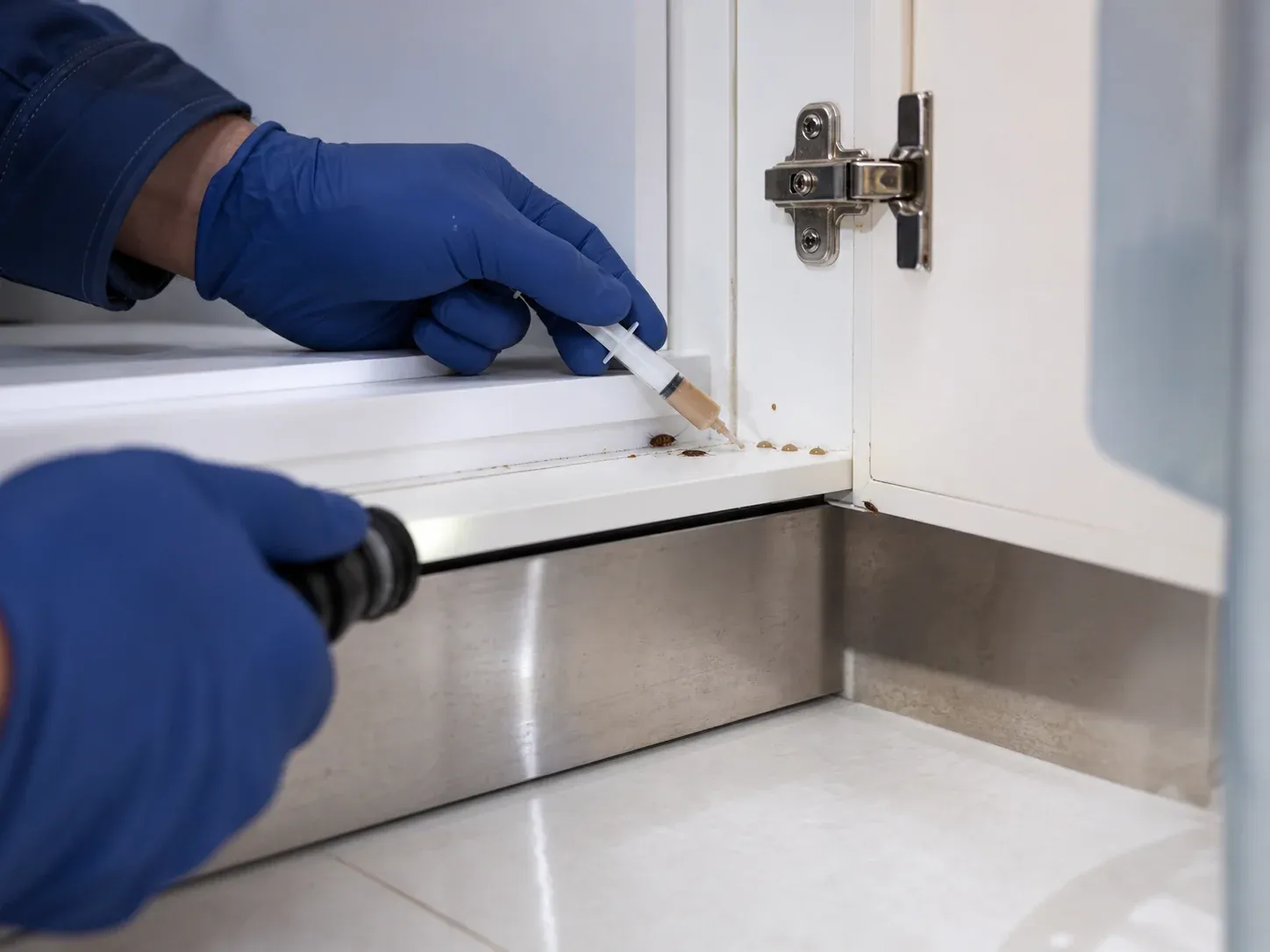
You flip on the kitchen light at night to grab a glass of water, and there’s a cockroach darting across the counter before it vanishes under the stove in a split second. That feeling is awful, and it goes beyond disgust. It’s the sense that your home is no longer yours alone. What makes it worse is that the roach you just spotted is almost certainly one of dozens hiding in the cracks and behind the cabinets. Roaches come out at night, when the house goes quiet and the lights are off, so the one on the counter is just the visible tip of a much bigger problem sitting below the surface.
The embarrassment peaks when you have guests over, or when your little girl screams from her room that she saw “a black thing running.” That’s when you feel like you’ve done everything right. You clean, you wipe, you spray, and the roaches still come back a few days later. The painful truth is that cleaning on its own isn’t enough, and the random store-bought spray only kills what’s visible while leaving the nest intact to breed all over again.
This article is written so you can understand your enemy properly. We’ll go over the types of cockroaches that invade Egyptian homes and how to tell them apart, why they show up at your place specifically even if your home is clean, how to know there’s a nest nearby, why home remedies fail, and what actually happens during a professional treatment. By the end, you’ll know exactly what you need to do to put this problem behind you once and for all.
The Types of Cockroaches That Invade Egyptian Homes
Not all cockroaches are the same, and the difference between them goes beyond looks. It determines where the nest is and how to treat it. Once you know which type you’re dealing with, you can search the right places and treat the right way. There are three main types you’ll run into in an Egyptian home.
The Small German Cockroach
This is enemy number one, the most dangerous type of all inside homes. It’s small, roughly a centimeter and a half, light brown or honey-colored, with two dark lengthwise stripes running down the back of the head. This type lives indoors year-round and rarely ventures outside. It favors the kitchen and bathroom for the warmth, the moisture, and the easy access to food and water.
What turns the German cockroach into a nightmare is how insanely fast it breeds. A single female carries an egg capsule holding 30 to 40 eggs, and she produces several capsules over her lifetime. So a handful of roaches can grow into hundreds within just two or three months. Because of its small size, it slips into the tightest cracks and hides in places you’d never even think of, like inside the fridge motor or behind the electrical panel.
The Large American Cockroach
This is the big roach that flies, the one that makes people scream. It can reach four or five centimeters long, with a glossy reddish-brown color. It moves fast and sometimes flutters its wings. Plenty of people assume it’s the most dangerous because it’s huge and terrifying, but the reality is it breeds far less indoors than the German cockroach does.
The American cockroach likes warm, damp, open spaces such as drains, sewers, basements, meter rooms, and pipes. It mostly lives outdoors or in the shared areas of a building, and it enters the home through drains, under doors, or through ventilation openings. So if you’re seeing this large type, the source is usually external, coming in through a specific entry point that we need to seal.
The Oriental (Drain) Cockroach
This type is dark black or very dark brown, with a wide, glossy body, and it moves slower than the others. Its smell is also nastier and stronger, and many people describe it as having a “musty odor.” As the name suggests, it’s tied to drains, high humidity, and cold, dark spots.
You’ll find it around drainpipes, under sinks, in floor drains, and in neglected damp corners. Its presence is usually a sign of a water leak somewhere or a drainage problem. It’s slower than the American and German types, but seeing it in large numbers means you have a damp environment attracting it that needs to be fixed at the root.
The roach you see on the floor isn’t the problem. It’s just a messenger. The real problem is the hidden nest that sent it out, and if you leave that nest untouched, it’ll keep sending messengers every night.
Why Do Cockroaches Show Up in My Home Even Though It’s Clean?
This is the question that confuses and frustrates people the most. “I clean every single day, so where are these roaches coming from?” The answer is that cleaning reduces what attracts them but doesn’t eliminate it. Cockroaches need very simple things to survive, and any home, no matter how clean, provides the bare minimum.
A cockroach is simple in its needs but stubborn in its presence. It looks for three basic things: food, water, and a warm, dark place to hide. Let’s break each one down.
The Hidden Food You’re Not Paying Attention To
You see a clean kitchen, but the roach sees a feast. Bread crumbs that fall behind the toaster, the layer of grease built up on the range hood and next to the stove, food residue wedged into the gaps between the counter and the wall, even the dry pet food you leave out all night. All of these are excellent food sources for a roach.
The thing we forget most is the area behind appliances. A lot of dust, grease, and crumbs collect behind and underneath the fridge, and that spot is warm too thanks to the motor heat, which makes it an ideal environment. The same goes for the area under and inside the stove.
Water and Moisture
A cockroach can survive for weeks without food, but it can’t last without water. That’s why a water source matters more to it than food in the first place. Any small leak under the sink, a drip from a faucet, or moisture around the kitchen water heater becomes a permanent watering station for it.
The bathroom is also a favorite spot for the same reason. The high humidity, the water pooling around the base of the toilet, the drain that stays damp, all of this makes the bathroom the second most common place to find roaches after the kitchen.
Cracks, Gaps, and Hiding Spots
By nature, a cockroach hates light and open spaces. It loves to wedge itself into a tight spot that touches its back and belly at the same time, since that gives it a sense of safety. Your home is full of places like this without you noticing: cracks in the walls, gaps behind baseboards, cavities inside cabinets, the space behind electrical panels and switches, and underneath loose tiles.
Coming in From Neighbors and the Drains
This is the point that drives a lot of people crazy. You can do absolutely everything right and have your home in perfect shape, and still get roaches from the neighboring apartment or the one below you. Cockroaches travel between apartments through shared drainpipes, AC openings, ceiling cavities, and the gaps around pipes that run through the walls.
That’s why you’ll sometimes find that your problem is tied to an infestation in the whole building, or to a source in the stairwell or the garbage room. This explains why an individual fix sometimes reduces the problem but doesn’t end it, as long as the main source is outside your apartment.
How Do I Know There’s a Cockroach Nest Nearby?
There’s a big difference between spotting a roach that wandered in through the window by mistake and having an active nest breeding inside your home. Telling the two apart matters so you can gauge the true size of the problem. There are clear signs that tell you the nest is close and active.
Cockroaches Appearing During the Day
This is the most alarming indicator of all. A cockroach is nocturnal by nature, hiding during the day and coming out at night. So if you start seeing roaches walking around in broad daylight, that means the population has grown so large that the space can no longer hold them all, forcing them out to look for food and water at a time that isn’t theirs. Daytime appearances are proof of an advanced infestation and an overgrown nest.
The Distinctive Smell
Large cockroach colonies give off a distinctive, unpleasant odor, a faint greasy, musty smell at first that intensifies as the numbers grow. If you open a kitchen cabinet or a drawer and notice a strange smell you can’t place, that can be a sign of nesting nearby.
Egg Capsules
This is one of the clearest and most useful pieces of evidence. An egg capsule looks like a small brown or dark-brown bean, about half a centimeter long, with a leathery texture. You’ll find it stuck in dark corners, in gaps, inside drawers, behind cabinets, and in the corners of kitchen cupboards. The presence of these capsules means actual breeding is taking place, not just passing roaches.
Tiny Newly Hatched Cockroaches
If you see very tiny roaches, roughly the size of a grain of rice, shaped like the adults but much smaller and sometimes without wings, that’s conclusive proof of an active nest inside your home. These little roaches can’t travel any distance, so their presence means they hatched nearby, which means the nest is inside your home, not outside.
Droppings
Cockroaches leave behind small black droppings. With the small German cockroach, they look like coffee specks or ground black pepper, and you’ll find them in corners, on cabinet shelves, and in drawers. The larger the population gets, the more the droppings build up and the more obvious they become.
Why Are Cockroaches a Threat to Your Family’s Health?
Some people treat cockroaches as nothing more than a disgusting sight to get rid of, but the reality is far more serious than that. Cockroaches don’t just look revolting. They carry diseases, contaminate food, and directly affect your children’s health, and that’s the most important reason to take the problem seriously.
Food Contamination and Spreading Germs
Think about where a cockroach walks before it reaches your kitchen. It moves through floor drains, sewer pipes, garbage, and over waste. All of these areas are loaded with bacteria and germs that cling to its legs and body. Then it comes and strolls across your counter, over your dishes, on top of your uncovered food, transferring all that contamination right along with it.
Cockroaches carry bacteria like salmonella and E. coli, which cause food poisoning, stomach bugs, diarrhea, and cramps, especially in children with weaker immune systems. Every dish a roach touches becomes a potential infection.
Allergies and Asthma in Children
This is a point a lot of people aren’t aware of. Cockroaches release allergens from the skin they shed, from their droppings, and from their saliva. These substances turn into fine particles that float through the air in your home and settle into the dust, and your family breathes them in without realizing it.
In children especially, ongoing exposure to these substances is linked to more frequent asthma attacks and allergy symptoms like repeated sneezing, nasal congestion, and itchy eyes. In other words, a cockroach infestation can be the hidden cause behind your child’s recurring chest trouble without anyone connecting the two.
Constant Surface Contamination
Even when there’s no direct poisoning, the constant presence of cockroaches means ongoing contamination of the surfaces that touch your food and dishes every day. This makes your home a chronically unhealthy environment, and no matter how much you clean, the source is still there contaminating it again every night.
Why Don’t Home Remedies and Borax End the Problem?
Anyone with a roach problem has tried at least one home remedy: borax, the sugar-and-baking-soda mix, or the supermarket bug spray. They all give a temporary sense that you’re doing something, but a few days later the roaches are back. Why? Because these methods treat the symptom, not the disease.
Ready-Made Sprays Kill What’s Visible and Leave the Nest
The store-bought spray you buy only kills the roach it makes direct contact with, and nothing more. You spray the 5 or 10 roaches you can see and think you’re done. But the real nest, with dozens or hundreds hiding in the cracks, was never touched. On top of that, the strong smell of the spray repels the roaches and scatters them, pushing them to hide deeper. So you spread the problem instead of solving it, and a week later the numbers are right back where they started.
Borax Is Slow and Limited
Borax does kill cockroaches if they eat it, but the trouble is in how it’s applied. The roach has to walk through the powder, then groom itself and ingest it, and that takes time. Roaches are also smart and avoid places where they’ve sensed danger. The dose they get is inconsistent, and the spots where people place the powder are usually wrong because you don’t know the real activity paths. The result is that it cuts the numbers down a little but doesn’t break the breeding cycle.
Home Mixes Are Weak and Inconsistent
Sugar-and-baking-soda mixes, sticky paper, or mint, these are all popular fixes that spread around but their effect is weak and short-lived. You might catch a few roaches or push them back a bit, but none of it reaches the nest or kills the eggs. And those eggs are the heart of the problem, because each capsule holds dozens of roaches ready to come out and replace the ones that died.
The Core Problem: Eggs and the Life Cycle
The biggest reason home remedies fail is that they ignore the egg capsules. An egg capsule has a hard shell that protects the eggs inside from most pesticides. So even if you kill every adult roach today, the existing capsules will hatch a few weeks later and produce a brand-new generation. That’s why any solution that doesn’t account for this life cycle is doomed to fail, and the infestation comes back as if you’d done nothing at all.
Home Methods That Can Reduce the Problem Temporarily
To be straight with you, there are things you can do yourself, but you need to understand them correctly. These things are prevention and reduction, not a real cure. They cut down what attracts roaches and make life harder for them, which matters and supports any professional treatment, but on their own they won’t wipe out an established nest. Think of them as the first line of defense, not the whole battle.
Deep Cleaning, Not Surface Cleaning
Ordinary cleaning isn’t enough. You need cleaning that targets the roaches’ spots specifically. Pull the fridge and the stove out from their places and clean behind and underneath them, clearing the grease and crumbs. Clean the range hood and the built-up layer of grease. Wipe down the insides of drawers and cabinets and remove any food residue wedged into the gaps. This deep cleaning removes the food sources the roaches live on.
Cut Off Water Sources
Look for any leak and fix it right away. Check the pipes under the sink, the dripping faucets, the moisture around the heater. Before you go to bed, wipe down the sinks and dry them, and make sure there’s no standing water in the kitchen or bathroom. When you cut off the water source, you deprive the roaches of the most important thing keeping them alive.
Store Food Tightly
Any dry food like flour, rice, pasta, sugar, and legumes, put it in tightly sealed containers instead of open bags. Don’t leave food uncovered on the counter at night, and that includes pet food. Don’t leave fruit and vegetables piled up. The more you cut down the food available at night, the more you limit the roaches’ ability to survive.
Managing Garbage and Cracks
- Empty the garbage every night and don’t leave it open until morning.
- Use a trash can with a tight-fitting lid.
- Seal the obvious cracks in the walls and the gaps around pipes with a suitable filler or silicone.
- Put a barrier under exterior doors if there’s a gap.
- Clean the floor drains and cover them when you’re not using them.
These steps will genuinely make a difference and reduce the problem, but if you have a real infestation with a nest and eggs, you need what comes next.
How Does a Professional Treatment Work?
This is where the real difference lies between chasing roaches until you’re exhausted and eliminating the problem at its root. A professional treatment isn’t just “a stronger spray.” It’s a carefully thought-out plan that targets the nest and the life cycle, and handles each type in its own way. Let’s walk you through what actually happens, step by step.
Step One: Inspection and Locating the Nesting Spots
Every successful treatment starts with an inspection. The technician comes to examine the home, not to look at the visible roaches, but to find the nest. He searches the places roaches usually hide: behind and under appliances, inside cabinets and in their corners, around pipes and sinks, in the cavities of electrical panels, and in cracks and gaps.
At the same time, he identifies the sources of attraction: where the water is, where the food is, where the entry points from outside are. From the type of roach, its locations, and the density of droppings and capsules, he estimates the true size of the infestation and draws up the right treatment plan. This inspection is what determines the success of everything that follows.
Step Two: High-Attraction Gel at Activity Points
Professional gel is a core weapon against cockroaches, especially the German type. But its strength isn’t only in the material. Its strength is in where it’s applied. The technician places small dots of gel exactly at the roaches’ actual activity points and travel routes, not at random. The dots go in corners, at cabinet hinges, around pipes, and in the gaps near the nest.
This gel is designed to be highly attractive, meaning the roach is drawn to it and eats from it. The powerful advantage is that it transfers between roaches. The roach that ate returns to the nest and dies, and the other roaches eat from its carcass and droppings and get affected too. This creates a chain reaction that reaches roaches you never even saw, inside the nest itself.
Step Three: Residual Spray in the Cracks
Gel alone isn’t enough in every case. That’s why a residual spray is applied in the cracks, gaps, and hiding spots. A residual spray means the material stays effective on the surface for a long time after it dries. So any roach that walks over the treated area afterward gets affected, even later on.
This creates a chemical barrier in the places where roaches move but don’t eat the gel, like behind baseboards and in tight cavities. Combining the gel that targets feeding with the spray that targets movement covers the roach’s behavior from every angle.
Step Four: Follow-Up to Break the Life Cycle
This is the step that separates a solution that lasts from one that comes back. As we said, egg capsules are protected and hatch after the first treatment. That’s why follow-up is essential. After a period from the first treatment, the new generation that hatched from the eggs has emerged, and the treatment is renewed to eliminate them before they grow and breed all over again.
This way we break the life cycle completely: we killed the adults, the gel and spray are still working, and the follow-up wiped out what hatched. This is the point no home remedy can pull off, and it’s the real reason a professional treatment actually ends the problem.
Why Is Gel Alone Sometimes Not Enough?
A lot of people hear about gel and assume it’s the magic solution all by itself, and in simple cases it genuinely is enough. But in other cases, gel on its own disappoints, and the reason isn’t that the gel is weak. The reason is that the problem is bigger than a single tool.
Gel works on the assumption that the roach will eat from it. But if there’s an open, abundant food source in the home around the clock, the roach may prefer its natural food and ignore the gel, especially if the gel was placed somewhere outside its travel path. Also, if the roach type isn’t the German one, like the American or the drain cockroach that comes in from outside, gel inside the home won’t solve the problem of the external source.
Most importantly, if the infestation is large with an established nest in deep cavities, gel reduces the numbers but doesn’t reach every spot. That’s why the successful solution in these cases is the combined plan:
- High-attraction gel at activity points to target the ones that eat.
- Residual spray in the cracks to target the ones that move but don’t eat.
- Treating the sources: sealing entry points, and removing available food and water.
- Follow-up to eliminate the new generation after the eggs hatch.
When these four elements work together, the roaches have no escape. This is what makes the result complete and lasting instead of temporary.
How Long Does It Take for Them to Disappear Completely?
This is a perfectly natural question, and we all want fast results. Being honest with you matters more than rosy promises. After the first treatment, you’ll notice a clear drop in the number of roaches within the first few days. Sometimes in the first day or two you’ll actually see more roaches showing up, and that’s normal and a good sign, because they’re coming out of the nest affected by the treatment and moving in the open before they die.
Near-complete disappearance usually happens within a week to two weeks, depending on the size of the infestation. As for the permanent elimination that doesn’t come back, that’s tied to the cockroach’s life cycle and the eggs hatching. That’s why the ideal window to confirm the result stretches over weeks that include follow-up, to make sure the generation that hatched from the capsules has been eliminated before it could breed.
Many factors affect the timing: the size of the infestation at the start, the type of roach, how clean the home is and how committed you are to prevention, and whether there’s an external source from neighbors or drains. The more you cooperate with the technician on prevention and cleaning up the sources, the faster the result comes and the more it sticks. Patience through the follow-up stage is the secret to the problem never coming back.
What Do Cockroach Control Prices Depend On?
Price is one of the questions on everyone’s mind, and that’s only natural. But the honest answer is that there’s no single fixed price that fits every case, because every home is different. Anyone who gives you a final price over the phone before seeing the place is usually just guessing, and that can turn out wrong in either direction. The real price is set after the inspection, and it depends on clear factors.
The Size of the Infestation
This is the most important factor. A minor infestation still in its early stages needs a simpler, cheaper treatment than an advanced one with an overgrown nest and daytime appearances. The bigger the infestation, the more materials and follow-up sessions it needs, and that’s reflected in the price in a logical way.
The Area and Number of Points
A small home isn’t like a villa, a shop, or a restaurant. The area determines the amount of materials required and the number of treatment points. Restaurants and commercial kitchens also have a special nature because they attract roaches heavily and need a recurring program, so it’s natural for their pricing to differ from an ordinary home.
The Roach Type and Source of the Infestation
If the problem is an indoor German cockroach, the plan differs from a case with an American roach coming in from the drain that needs entry points treated. And the presence of an external source from the building or the neighbors may require extra handling. All of this goes into the technician’s estimate.
That’s why our approach is to inspect first, get the full picture, and then give you a clear, written price before we start, with no surprises. That way you know exactly what you’re paying for and you get a guarantee on it. You can check out the details of our cockroach control service, or browse all our pest control services if you have more than one type of pest and want a comprehensive solution.
How Do You Choose a Good Cockroach Control Company?
The market is full of offers, and there are people who work haphazardly, spraying cheap pesticide and leaving, with the result that the problem comes back and you’ve paid for nothing. To choose right, there are criteria you need to look for and ask about before you sign with anyone.
A Real Guarantee
A company confident in its work offers you a guarantee. That guarantee means that if the roaches come back within a certain period, they return to treat at no extra cost. Anyone unwilling to give you a guarantee is signaling they’re not confident their work will last. A guarantee protects you and holds the company accountable for the result.
Safe, Approved Materials
You’re treating a home with children and possibly pets, so the type of materials used isn’t a minor detail. Ask about the materials, are they approved and safe when applied correctly? A professional company uses licensed materials and applies them in a way and in places that minimize any exposure to children and food, and it tells you about any simple precautions to take before and after treatment.
Experience and Handling All Types
Experience makes the difference in one essential thing: the ability to read the problem. An experienced technician can tell the types apart, find the nest, and pick the right plan from the very first time. Ask about the company’s experience with the specific type you have, and whether they’ve worked on cases similar to yours before.
Transparency at Every Step
From the very first call, you’ll get a sense of a respectable company. They inspect for you first, explain the problem honestly without blowing it out of proportion to scare you or downplaying it to reassure you, give you a clear price before they start, and set realistic expectations about the timeline. Any vagueness about the price or fantastical promises of instant, permanent results, be wary of those.
Practical Tips Before You Sign
- Ask for an inspection before any commitment on price.
- Ask about the guarantee, its duration, and its terms.
- Ask whether follow-up is included in the price or separate.
- Ask for clarification on the materials used and how safe they are around children.
- Read reviews and feedback from past customers if available.
Prevention Tips That Make Your Home Unappealing to Roaches
Once the problem is treated, the goal is for it not to come back. And prevention is far cheaper and easier than treatment. The whole idea is to deprive roaches of the things they live on, which makes your home a place that doesn’t tempt them in the first place. These tips are simple habits that, once they become part of your routine, will make a big difference.
In the Kitchen
- Clean the counter and stove of food residue and grease every night.
- Pull the appliances out from their places and clean behind them on a regular basis every so often.
- Store all dry food in sealed containers.
- Don’t leave dirty dishes in the sink at night.
- Empty the garbage daily into a bin with a tight-fitting lid.
In the Bathroom
- Fix any leak or drip right away.
- Dry the sinks and the floor before bed as much as possible.
- Cover the floor drain when you’re not using it.
- Pay attention to ventilation to reduce humidity.
Throughout the Whole Home
- Seal the cracks and gaps in the walls and around pipes.
- Put barriers under exterior doors if there’s a gap.
- Inspect any boxes or bags you bring into the home, since they sometimes bring in roaches or egg capsules inside them.
- If there’s an infestation in the building, talk to the neighbors and join forces on a solution, so the shared source gets treated.
These habits won’t take much of your time once you get used to them, but their effect is powerful. A home deprived of food, water, and hiding spots is a home that doesn’t welcome roaches, and that’s what makes the result of the treatment last for years.
Frequently Asked Questions About Cockroaches
Do cockroaches come from the garbage or the drains?
Both. The drain cockroach and the large American one mostly come in through drainpipes and floor drains. And exposed garbage attracts every type as a food source. That’s why prevention has to include covering the floor drains and managing garbage tightly.
Does seeing a single cockroach mean there’s a nest?
Not necessarily. Sometimes it’s a roach that wandered in from outside by mistake. But if you see recurring roaches, or tiny ones, or one during the day, or egg capsules, that most likely means there’s an active nest inside your home that needs treatment.
Is the pesticide safe for children and animals?
Professional materials, when applied correctly and in the right places, are safe, because they’re placed in cracks and hiding spots out of reach of children and food. What matters is that they’re applied by a specialized technician who knows the doses and the locations, and that you follow any simple precautions he tells you about before and after treatment.
Why do cockroaches come back a week after spraying?
Because ordinary spraying only kills the visible adults and leaves the eggs in their protected capsules, and the eggs hatch a few weeks later and produce a new generation. The solution is to break the life cycle completely with a combined plan that includes follow-up after the eggs hatch, and that’s what prevents the comeback.
What’s the fastest way to get rid of cockroaches in the kitchen?
The fastest lasting result comes from a professional treatment that locates the nest and targets it with gel and a residual spray plus follow-up, not from home remedies that reduce the numbers temporarily. Home remedies help as prevention, but they don’t deliver a fast, permanent elimination of a real infestation.
I have cockroaches and bed bugs together, what do I do?
This happens, especially in homes with multiple infestations. Each insect has a different treatment method, so the solution is to handle them in a comprehensive plan. If you have a bed bug problem too, read our guide on getting rid of bed bugs for good to understand the difference in handling them, and it’s best for a single technician to inspect both cases and organize the treatment.
The Bottom Line
Cockroaches aren’t just a disgusting sight that shows up at night. They’re a problem that breeds fast, contaminates your food, and affects your children’s health without you feeling it. And the roach you see is always far fewer than the ones hiding in the cracks and the nest. That’s why cleaning and random spraying reduce the problem but don’t end it, because the protected eggs hatch and bring the infestation back all over again.
The solution that lasts starts with an inspection that identifies the roach type and the nesting spots, and relies on a combined plan: high-attraction gel at activity points, residual spray in the cracks, treating the food and water sources and entry points, and follow-up that breaks the life cycle after the eggs hatch. This is what makes the result permanent rather than temporary.
If cockroaches have started showing up over and over and you’re tired of solutions that come and go, working with a specialist will save you time, money, and give you a guaranteed result backed by a guarantee. Make your kitchen a clean, worry-free place for your family, and cut the cockroach cycle off at the root once and for all.